
Glaucoma damages the optic nerve slowly. In most people it causes no pain and no blurring until a good part of the side vision has gone, which is why it is usually found at a check-up rather than because someone noticed a problem. At Advanced Eyecare Centre in Goregaon West, Dr. Shirish Patel sees people at every stage: a first pressure reading that looked high, long-term care with drops, and surgery when it is needed.
At a glance
- Who it is for
- Raised eye pressure, suspected glaucoma, a family history of glaucoma, existing glaucoma, second opinions
- Tests at the clinic
- Eye pressure (applanation tonometry), OCT scan, visual field test, corneal thickness, optic nerve examination
- Treatment
- Eye drops and regular monitoring at the clinic, with laser and surgery when needed
- Surgery
- Performed by Dr. Shirish Patel at several hospitals in Mumbai, or at a hospital you prefer where arrangements allow
- Hours
- Monday to Saturday, 10 AM to 2 PM and 5 PM to 9 PM. Closed on Sunday.
- Languages
- English, Hindi, Marathi, Gujarati
Sudden eye pain or vision change? Treat it as an emergency. Severe eye pain, a red eye, blurred vision with haloes around lights, headache, nausea or vomiting can be an acute angle-closure attack. Go to the nearest emergency department or eye hospital straight away. Do not wait for a clinic appointment or a WhatsApp reply, and do not drive yourself.
What glaucoma is
Glaucoma is a group of eye diseases that damage the optic nerve, the cable that carries what the eye sees to the brain. In Hindi it is often called kala motia. The damage usually starts at the edges of vision and moves inwards, and nerve fibres lost to glaucoma do not grow back. Treatment cannot restore lost vision. It can slow or stop further loss.
Eye pressure matters, but it is not the whole story. Some people have high pressure for years without any nerve damage, a condition called ocular hypertension. Others develop glaucoma with pressure in the normal range. A pressure reading on its own does not confirm or rule out glaucoma. It has to be read together with the optic nerve, the OCT scan and the visual field.
Who should be checked
Early glaucoma rarely causes symptoms, so waiting to notice a change is not a safe plan. An assessment is worth booking if:
- a parent, brother or sister has glaucoma
- an eye test found raised pressure, or a report mentions a suspicious optic disc or a large cup
- you are over 40 and have never had your eye pressure and optic nerve checked
- you have a high minus spectacle number, diabetes, or have used steroid tablets, drops or inhalers for a long time
- you have had an eye injury or inflammation inside the eye
- you already have glaucoma and need continuing care, or want a second opinion on your treatment
Do not stop steroids prescribed for another condition on your own. Speak to the doctor who prescribed them, and mention them at your eye visit.
Types of glaucoma
The type decides which treatment makes sense, so it is one of the first things the assessment sets out to answer.
- Open-angle glaucoma. The drainage angle is open but works poorly. It progresses slowly and silently.
- Angle-closure glaucoma. The iris blocks the drainage angle. It is relatively common in India, and can build up slowly or cause a sudden painful attack.
- Normal-tension glaucoma. The optic nerve is damaged although pressure readings are within the normal range.
- Secondary glaucoma. Caused by something else, such as an injury, inflammation, long-term steroid use or an advanced cataract.
- Childhood glaucoma. Rare. In babies it can show as large or cloudy eyes, watering and sensitivity to light, and needs prompt specialist care.
Glaucoma tests
No single test answers every question about glaucoma. Depending on your findings, the assessment can include:
| Test | What it checks |
|---|---|
| Eye pressure (applanation tonometry) | The pressure inside the eye, measured with the standard contact method |
| Optic nerve examination | The shape and colour of the optic nerve head, seen at the slit lamp, usually after dilating drops |
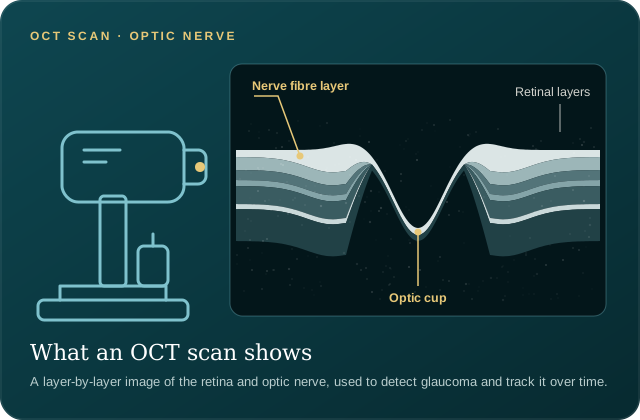
| OCT scan | The thickness of the nerve fibre layer around the optic nerve, compared with normal values |
| Visual field test (automated perimetry) | Whether there are blind patches in your side vision |
| Corneal thickness (pachymetry) | How thick the cornea is, which changes how a pressure reading is interpreted |
| Gonioscopy | Whether the drainage angle is open or narrow, seen through a special contact lens |
Eye pressure, OCT, visual field and corneal thickness tests are done at the clinic. Not every test is repeated at every visit, and earlier reports help, because glaucoma is judged by change over time.
After your assessment
By the end of the consultation you should know:
- whether glaucoma is confirmed, suspected, or not present at this point
- which type it is, and how advanced it is
- whether treatment is needed now, or regular monitoring is enough
- what pressure the treatment is aiming for, if it starts
- when to come back, and which tests will be repeated
If you have been diagnosed elsewhere, bring all your reports. Dr. Patel is happy to review an existing diagnosis or treatment plan as a second opinion.
Treatment options
Treatment aims to lower eye pressure enough to protect the optic nerve. The right method depends on the type of glaucoma, how advanced it is, your other health conditions and how your eyes respond.
Eye drops
Most people start with drops, used every day for the long term. They either reduce the fluid the eye makes or help it drain. Drops do not make the eye feel or see any different, which is exactly why people stop them, and why stopping without advice is risky. Some drops can affect breathing or heart rate, so tell the doctor about asthma, heart problems and every other medicine you take. If a drop stings, is hard to put in or is difficult to afford, say so. There is usually an alternative.
Laser treatment
For some types of open-angle glaucoma, a laser called selective laser trabeculoplasty (SLT) improves drainage and lowers pressure, and can reduce the number of drops needed. For narrow or closed angles, a laser iridotomy makes a tiny opening in the iris to keep the angle open, and is often advised to prevent an acute attack. If laser suits your eye, Dr. Patel will explain which type and where it will be done.
Glaucoma surgery
Surgery is considered when pressure stays too high despite drops and laser, or when damage is still advancing. Depending on the eye, options include trabeculectomy, a glaucoma drainage implant, or minimally invasive glaucoma surgery (MIGS) for selected eyes.
Dr. Shirish Patel performs glaucoma surgery at several hospitals in Mumbai, and where needed can operate at a hospital you prefer, subject to that hospital's arrangements. Surgery protects the vision you have. It does not bring back vision that is already lost.
Risks, recovery and follow-up
Every glaucoma procedure carries risks, and they differ from one procedure to the next. After surgery they include pressure dropping too low, infection, bleeding inside the eye, faster cataract development and, rarely, loss of vision. Before any procedure you should hear the specific risks for your eye, the alternatives, and what recovery involves.
Recovery after laser is usually quick, with a mild ache or blur for a day or so. After surgery, drops and several follow-up visits in the first weeks are routine, and heavy lifting, swimming and rubbing the eye are off limits for a while.
Glaucoma care does not end with a prescription or an operation. Pressure is checked regularly, and OCT and visual field tests are repeated, from every few months to once a year depending on how stable the eye is. Keep these visits even when your sight feels fine. Brothers, sisters and children of someone with glaucoma should be checked too.
Preparing for your visit
Please bring:
- earlier eye reports, prescriptions, OCT scans and visual field printouts
- the glaucoma drops you use now, or a photo of the bottles
- a list of your other medicines, allergies and health conditions
- details of anyone in the family with glaucoma
Dilating drops may be used. They blur vision and make you sensitive to light for a few hours, so bring sunglasses and avoid driving yourself home.
Cost and insurance
Charges depend on which tests you need and whether drops, laser or surgery is advised, so there is no single figure. Please call or WhatsApp the clinic for current consultation and test charges.
If surgery is recommended, ask the hospital where it will be done for a written estimate, and confirm insurance or cashless approval with your insurer and that hospital before the date is fixed.
About your doctor
Dr. Shirish Patel is a consultant eye surgeon at Advanced Eyecare Centre, Goregaon West.
- MBBS, Seth G.S. Medical College and KEM Hospital, Mumbai
- DNB Ophthalmology, PBMA's H.V. Desai Eye Hospital, Pune
- FICO (A+B)
- Short-term fellowship in glaucoma, Bhaktivedanta Hospital, Mira Road
- Registered with the Maharashtra Medical Council, Reg. No.: to be added
- Consultations in English, Hindi, Marathi and Gujarati
Education and training in full →
Visiting the clinic
Advanced Eyecare Centre
1st Floor, A Wing, Ariha Signature, 105, near Jain Sweets, Jawahar Nagar, Goregaon West, Mumbai 400104
Hours: Monday to Saturday, 10 AM to 2 PM and 5 PM to 9 PM. Closed on Sunday.
Phone: +91 98338 52420 · WhatsApp: +91 74003 22526
The clinic is in Jawahar Nagar, Goregaon West, within easy reach of Malad, Jogeshwari, Andheri and Kandivali. Open in Google Maps →
A WhatsApp or phone message is not an emergency service. For sudden severe eye pain or vision loss, go to the nearest emergency department.
Questions patients ask about glaucoma care
Does high eye pressure mean I have glaucoma?
Not necessarily. High pressure without damage to the optic nerve is called ocular hypertension. It still needs a proper assessment, because it raises the risk of glaucoma and some people need treatment or regular monitoring.
Can I have glaucoma even if my eye pressure is normal?
Yes. In normal-tension glaucoma the optic nerve is damaged although pressure readings are within the usual range. This is why the optic nerve, the OCT scan and the visual field test matter as much as the pressure number.
How long does a glaucoma check-up take?
Longer than a routine eye test, because dilating drops take time to work and more than one test may be needed. Ask the clinic how long to set aside when you book.
Can I drive after the check-up?
Not if your pupils have been dilated. Vision stays blurred and sensitive to glare for a few hours, so come with someone or plan to take a cab home.
Can I get a second opinion on my glaucoma treatment?
Yes. Bring all your earlier reports, OCT scans, visual field printouts and the drops you use now. Comparing old and new results is often more useful than a single test.
Where is glaucoma surgery done?
Dr. Shirish Patel performs glaucoma surgery at several hospitals in Mumbai, and where needed can operate at a hospital you prefer, subject to that hospital's arrangements. The options are discussed when surgery is advised.
What does glaucoma treatment cost?
It depends on the tests and treatment your eyes need. Please call or WhatsApp the clinic for current consultation and test charges.
Will I still need check-ups after laser or surgery?
Yes. A procedure lowers pressure but does not remove the need for monitoring. Pressure checks and repeat scans continue, and drops may still be needed.
Is the clinic open on Sunday?
No. The clinic is open Monday to Saturday, 10 AM to 2 PM and 5 PM to 9 PM.
Sources: National Eye Institute · NICE (UK) · NHS
This page explains glaucoma care in general. It is not a diagnosis and does not replace an examination or an individual treatment plan. For sudden vision loss, severe eye pain or injury, go to your nearest emergency department immediately.