
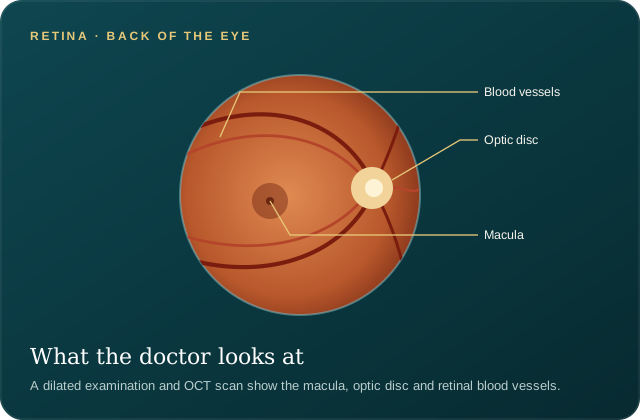
The retina is the light-sensitive layer at the back of the eye, and its centre, the macula, gives the sharp vision you use to read and recognise faces. Many retinal problems cause no symptoms until vision is already affected, which is why regular checks matter, especially for people with diabetes.
At a glance
- Who it is for
- People with diabetes, a new blur or distortion in central vision, high blood pressure, or an existing retinal diagnosis
- At the clinic
- Dilated retinal examination and OCT scan of the macula
- Treatment
- Monitoring, anti-VEGF injections and laser when needed. Retinal surgery is arranged by referral.
- Hours
- Monday to Saturday, 10 AM to 2 PM and 5 PM to 9 PM. Closed on Sunday.
- Languages
- English, Hindi, Marathi, Gujarati
Flashes of light, a sudden shower of floaters or a dark curtain across your vision can mean a retinal tear or detachment. This is an emergency. Go to the nearest emergency eye service the same day, and do not wait for a routine appointment or a WhatsApp reply.
Conditions that are checked
Diabetic retinopathy
Diabetes can damage the small blood vessels of the retina. Early changes cause no symptoms. Leakage at the macula, called diabetic macular oedema, blurs central vision and is a common reason for vision loss in people with diabetes.
Age-related macular degeneration (AMD)
AMD affects central vision, usually after 50. Straight lines may look wavy, reading becomes harder, or a blurred patch appears in the centre. The dry form progresses slowly. The wet form can damage vision quickly and needs prompt treatment.
Retinal vein occlusion
A blocked retinal vein causes bleeding and swelling in the retina, and a sudden blur in part or all of the vision. High blood pressure, diabetes and glaucoma raise the risk.
When to have your retina checked
- if you have diabetes, at least once a year, and more often if changes are found
- if you have diabetes and are pregnant
- straight away if straight lines look wavy or a blurred patch appears in your central vision
- if you have high blood pressure or a previous retinal problem
Good vision does not rule out diabetic changes in the retina. Only an examination does.
What the assessment involves
Depending on your findings, the assessment includes a vision check, a dilated examination of the retina and an OCT scan, which shows the layers of the macula and any swelling. These are done at the clinic. Retinal photographs help track changes, and when more detail about the blood vessels is needed, an angiography test may be arranged.
Treatment options
Monitoring and general health
Some early changes only need regular checks. Good control of blood sugar, blood pressure and cholesterol slows diabetic eye disease, and stopping smoking lowers the risk of AMD getting worse.
Anti-VEGF injections
For wet AMD, diabetic macular oedema and swelling after a vein occlusion, a medicine called anti-VEGF is injected into the eye to reduce leakage and abnormal vessels. It is given under sterile conditions after numbing drops, and usually needs a course of injections with regular reviews rather than a single dose. Where the injections are given is explained when treatment is advised.
Retinal laser
Laser treatment is used for selected diabetic changes and some complications of vein occlusion. Its purpose depends on the diagnosis, and it is arranged when needed.
Retinal surgery
Retinal detachment, bleeding inside the eye that does not clear, and some macular conditions need a vitreoretinal surgeon. These are arranged by referral.
Risks and aftercare
Injections into the eye are routine but carry risks, including infection, a rise in eye pressure, bleeding and, rarely, retinal detachment. Increasing pain, redness or reduced vision in the days after an injection needs same-day advice. Keep to the review schedule you are given. Vision improving does not always mean treatment can stop.
Preparing for your visit
- earlier retinal scans, reports and injection records
- recent blood sugar readings or HbA1c, and your blood pressure readings
- a list of your medicines
Dilating drops are usually needed. They blur vision for a few hours, so bring sunglasses and do not drive yourself home.
Cost
Charges depend on the tests and any treatment advised. Please call or WhatsApp the clinic to enquire. If a course of injections is recommended, ask about the expected number of injections and the cost of the full course, not only the first visit.
About your doctor
Dr. Shirish Patel is a consultant eye surgeon at Advanced Eyecare Centre, Goregaon West.
- MBBS, Seth G.S. Medical College and KEM Hospital, Mumbai
- DNB Ophthalmology, PBMA's H.V. Desai Eye Hospital, Pune
- FICO (A+B)
- Registered with the Maharashtra Medical Council, Reg. No.: to be added
- Consultations in English, Hindi, Marathi and Gujarati
Education and training in full →
Visiting the clinic
Advanced Eyecare Centre
1st Floor, A Wing, Ariha Signature, 105, near Jain Sweets, Jawahar Nagar, Goregaon West, Mumbai 400104
Hours: Monday to Saturday, 10 AM to 2 PM and 5 PM to 9 PM. Closed on Sunday.
Phone: +91 98338 52420 · WhatsApp: +91 74003 22526
The clinic is in Jawahar Nagar, Goregaon West, within easy reach of Malad, Jogeshwari, Andheri and Kandivali. Open in Google Maps →
A WhatsApp or phone message is not an emergency service. For sudden severe eye pain or vision loss, go to the nearest emergency department.
Questions patients ask about retina care
Do I need a retina check if diabetes has not affected my vision?
Yes. Early diabetic retinopathy causes no symptoms. A dilated examination every year finds it before vision is affected.
How often should someone with diabetes have an eye check?
At least once a year, and more often if changes are found or during pregnancy.
Will one injection be enough?
Usually not. Most conditions treated with injections need a course, with the number and timing guided by how your eye responds.
What does an eye injection feel like?
The eye is numbed with drops first. Most people feel brief pressure, and the eye may feel gritty for a day afterwards.
Are injections used for every retinal problem?
No. Treatment follows the diagnosis. Some conditions need only monitoring, some need laser, and some need surgery.
Can I drive after a retina check?
Not if your pupils have been dilated. Vision stays blurred for a few hours, so come with someone or take a cab.
What does retina treatment cost?
It depends on the tests and treatment needed. Please call or WhatsApp the clinic to enquire.
Is the clinic open on Sunday?
No. The clinic is open Monday to Saturday, 10 AM to 2 PM and 5 PM to 9 PM.
Sources: National Eye Institute: diabetic retinopathy · National Eye Institute: AMD · National Eye Institute: retinal detachment
This page explains medical retina care in general. It is not a diagnosis and does not replace an examination or an individual treatment plan. For sudden vision loss, severe eye pain or injury, go to your nearest emergency department immediately.