
Dry eye is one of the most common reasons people see an eye doctor, and one of the most often missed. Long hours on screens, air-conditioned offices and contact lenses all play a part. The symptoms are real, and the right treatment depends on finding which part of the tear film is failing.
At a glance
- Who it is for
- Burning, gritty or watery eyes, screen strain, contact lens discomfort, crusty eyelids, and dry eye before LASIK or cataract surgery
- Assessment
- Symptoms and history, eyelids and oil glands, tear film stability and the eye surface, checked at the slit lamp
- Treatment
- Lubricating drops, eyelid care, prescription drops where needed, and changes to screen habits and surroundings
- Hours
- Monday to Saturday, 10 AM to 2 PM and 5 PM to 9 PM. Closed on Sunday.
- Languages
- English, Hindi, Marathi, Gujarati
What dry eye is
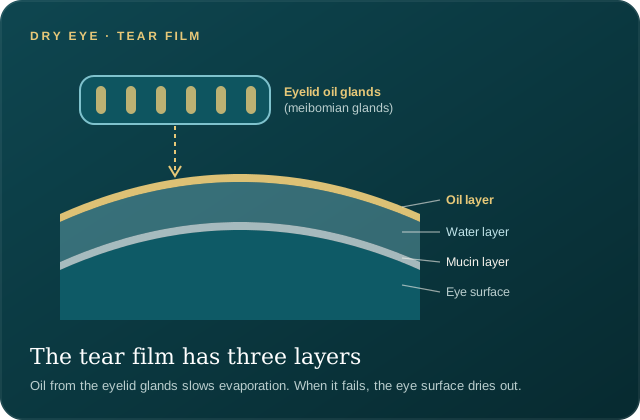
Every blink spreads a thin tear film over the eye. It has three layers: oil from glands in the eyelids, water, and a mucin layer that helps tears stick to the surface. Dry eye happens when the eye makes too few tears, or when the tear film breaks up too quickly, most often because the oil glands are not working well.
Common symptoms
- burning, stinging or a gritty feeling
- redness, and tired eyes by the evening
- blurred vision that clears when you blink
- watering, as the eye tries to make up for a poor tear film
- discomfort with contact lenses or in air conditioning
- sensitivity to light
Watery eyes can be a sign of dry eye, not the opposite. Allergy, infection and eyelid problems can feel similar, so an examination comes first.
Why it happens
- screen use, because people blink less while concentrating on a screen
- air conditioning, fans, travel and pollution
- contact lens wear
- age and hormonal changes, especially after menopause
- medicines such as antihistamines, some antidepressants and some blood pressure tablets
- autoimmune conditions such as Sjögren's syndrome and rheumatoid arthritis
- eyelid inflammation (blepharitis) and blocked oil glands (meibomian gland dysfunction)
- previous LASIK or other eye surgery
Do not stop a prescribed medicine yourself because you suspect it is drying your eyes. Speak to the doctor who prescribed it.
What happens at the assessment
The doctor asks when the symptoms are worst, which drops you use now, and how much screen time and contact lens wear is involved. At the slit lamp, the eyelids, oil glands and eye surface are examined, tear break-up time is measured, and a harmless dye shows any dry patches. A tear production test may be added where it helps.
Treatment
Lubricating drops, gels and ointments
Artificial tears support the tear film. Preservative-free drops suit people who need them often. Gels and ointments at night help with morning symptoms.
Eyelid care
When blocked oil glands are the main cause, warm compresses and daily eyelid cleaning help the oil flow again. Ask for a demonstration, since technique matters.
Prescription treatment
Persistent or more severe dry eye may need prescription drops that calm inflammation on the eye surface, or a short course of other medicines, after assessment.
Habits and surroundings
Follow the 20-20-20 rule on screens: every 20 minutes, look at something 20 feet away for 20 seconds. Keep screens slightly below eye level, point air-conditioning vents away from your face, and drink enough water. Punctal plugs, which slow tear drainage, help in selected cases, but most people do not need them.
Dry eye before LASIK or cataract surgery
An unstable tear film can affect the measurements taken before LASIK or cataract surgery, and can make recovery more uncomfortable. Dry eye is treated first, and the measurements are repeated once the surface has settled.
What to expect
Dry eye is often long-term, but it can usually be controlled well. Improvement takes a few weeks of regular treatment, and a review visit checks whether the plan is working.
A painful red eye, especially in a contact lens wearer, is not ordinary dry eye. Remove your lenses and see an eye doctor the same day. Severe pain, sudden loss of vision or strong sensitivity to light also need urgent care.
Preparing for your visit
- the drops you use now, or photos of their labels
- your contact lens type and daily wearing hours
- a list of your medicines
- a note of when your symptoms are worst
Cost
Charges depend on the tests and treatment advised. Please call or WhatsApp the clinic to enquire, and ask about the cost of any drops you may need to use long-term.
About your doctor
Dr. Shirish Patel is a consultant eye surgeon at Advanced Eyecare Centre, Goregaon West.
- MBBS, Seth G.S. Medical College and KEM Hospital, Mumbai
- DNB Ophthalmology, PBMA's H.V. Desai Eye Hospital, Pune
- FICO (A+B)
- Registered with the Maharashtra Medical Council, Reg. No.: to be added
- Consultations in English, Hindi, Marathi and Gujarati
Education and training in full →
Visiting the clinic
Advanced Eyecare Centre
1st Floor, A Wing, Ariha Signature, 105, near Jain Sweets, Jawahar Nagar, Goregaon West, Mumbai 400104
Hours: Monday to Saturday, 10 AM to 2 PM and 5 PM to 9 PM. Closed on Sunday.
Phone: +91 98338 52420 · WhatsApp: +91 74003 22526
The clinic is in Jawahar Nagar, Goregaon West, within easy reach of Malad, Jogeshwari, Andheri and Kandivali. Open in Google Maps →
A WhatsApp or phone message is not an emergency service. For sudden severe eye pain or vision loss, go to the nearest emergency department.
Questions patients ask about dry eye
Can dry eyes also be watery?
Yes. When the tear film is poor, the eye can react by producing extra watery tears. An examination shows the cause.
Is dry eye permanent?
It is often long-term, but most people get good control with the right treatment and habits. Some causes, such as a medicine or a contact lens problem, can be corrected.
Should I keep trying different drops until one works?
No. Different drops treat different problems. If symptoms continue, book an assessment and bring the drops you have tried.
Does screen time cause dry eye?
Screens reduce how often you blink, which dries the surface. Regular breaks, the 20-20-20 rule and a good screen position help.
Can I keep wearing contact lenses?
Often yes, with changes such as a different lens type, shorter wearing time or lubricating drops. This depends on your examination.
What does dry eye treatment cost?
It depends on the tests and treatment needed. Please call or WhatsApp the clinic to enquire.
Is the clinic open on Sunday?
No. The clinic is open Monday to Saturday, 10 AM to 2 PM and 5 PM to 9 PM.
Sources: National Eye Institute · American Academy of Ophthalmology · NHS
This page explains dry eye care in general. It is not a diagnosis and does not replace an examination or an individual treatment plan. For sudden vision loss, severe eye pain or injury, go to your nearest emergency department immediately.