
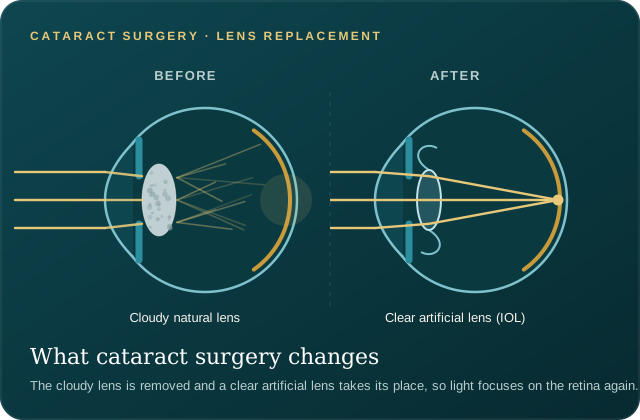
A cataract is the eye's natural lens turning cloudy, usually with age. Surgery replaces it with a clear artificial lens, and it is one of the most common operations in eye care. The decisions that matter are when to operate, which lens to choose, and how to plan recovery. Dr. Shirish Patel works through all three with you at Advanced Eyecare Centre in Goregaon West.
At a glance
- Who it is for
- Blurred or dim vision, glare at night, a diagnosed cataract, or a second opinion on planned surgery
- Technique
- Phacoemulsification through a micro-incision, usually without stitches
- Lens options
- Monofocal, toric, EDOF, multifocal and trifocal, including imported lenses
- Anaesthesia
- Usually numbing drops, sometimes a small injection. You stay awake.
- Hours
- Monday to Saturday, 10 AM to 2 PM and 5 PM to 9 PM. Closed on Sunday.
- Languages
- English, Hindi, Marathi, Gujarati
What a cataract is
Inside the eye, behind the coloured iris, sits a natural lens that focuses light on the retina. A cataract is that lens turning cloudy, so vision becomes blurred, dim or washed out. In Hindi it is called motiyabind or safed motia.
Most cataracts come with age. They can develop earlier with diabetes, long-term steroid use, an eye injury, previous eye surgery or a lot of sun exposure.
Signs worth checking
- cloudy, blurred or dim vision that glasses no longer fix
- glare from sunlight, lamps or oncoming headlights
- difficulty seeing at night
- colours looking faded or yellowish
- frequent changes in your spectacle number
- double vision in one eye
Other eye conditions can cause the same symptoms, so an examination comes before any decision about surgery.
When surgery makes sense
The time to operate is when the cataract gets in the way of reading, work, driving or other daily activities, even with suitable glasses. You do not need to wait for the cataract to "ripen". Equally, a mild cataract does not always need surgery yet. A new pair of glasses and a review in six months can be the right answer, and you will be told so if that is the case.
Your cataract consultation
The assessment usually includes:
- checking your vision and current glasses
- a slit-lamp examination of the cataract and the front of the eye
- a dilated examination of the retina, with an OCT scan of the macula where needed
- a review of your health, medicines and any previous eye surgery or LASIK
- measurements of the eye to calculate the lens power, once surgery is planned
The first question is whether the cataract is really the main cause of your symptoms. After that, tell the doctor what matters most to you: reading, computer work, driving at night, cooking, or being free of glasses for most of the day. That conversation shapes the lens choice.
Useful questions to ask:
- How much of my problem is the cataract, and what improvement can I expect?
- Which lenses suit my eyes, and which do not?
- Where will the surgery be done?
- What does the estimate include, and what is charged separately?
How the operation works
The cloudy natural lens is removed and a clear artificial lens, called an intraocular lens or IOL, is placed in the same position. It stays there for life.
Phacoemulsification
In phacoemulsification, the cataract is broken up with ultrasound and removed through a cut of two to three millimetres. The folded lens is then placed inside the eye, where it opens out. Micro-incision surgery uses an even smaller cut. Stitches are usually not needed.
Laser-assisted surgery
Some centres use a femtosecond laser for certain steps, such as the incisions. The cataract still has to be removed and a lens implanted. For a routine cataract, laser assistance does not by itself mean better vision or faster recovery. It can help in specific situations, so ask which approach is recommended for your eye and why.
Choosing a lens
No single lens is right for everyone. The choice depends on the health of your eye, your daily activities and how you feel about wearing glasses for some tasks.
| Lens | What it is designed to do |
|---|---|
| Monofocal | Clear focus at one distance, usually far. Glasses are needed for reading. |
| Toric | Also corrects astigmatism (a cylinder number), so distance vision is sharper without glasses. |
| Multifocal or trifocal | Focus at several distances, reducing dependence on glasses. Some people notice haloes around lights at night. |
| EDOF | A stretched range of focus from distance to arm's length. Reading glasses may still be needed for small print. |
Eyes with macular disease, advanced glaucoma or significant dry eye may not suit every lens. No lens can promise complete freedom from glasses.
On the day of surgery
Cataract surgery is a day-care procedure. Expect to spend two to three hours at the hospital, most of it in preparation and checks. The operation itself usually takes ten to twenty minutes. You stay awake, the eye is numbed, and you may see lights and movement.
The eye is covered with a clear shield rather than a bandage, and you go home the same day with someone accompanying you. Do not drive yourself. You leave with written instructions for your drops and a follow-up appointment for the next day.
Before the day, tell the team about all your medicines, especially blood thinners and diabetes medicines, and any allergies. Do not stop a medicine on your own unless you are told to.
What improvement to expect
Surgery removes the blur caused by the cataract. How sharp your vision becomes also depends on the rest of the eye. Glaucoma, diabetic changes, macular degeneration or a previous injury can limit the result, and these are explained before you decide.
Recovery and aftercare
Vision is usually usable the next day and settles over two to four weeks. The final glasses prescription is given after about three to four weeks.
- Use the prescribed drops on schedule, usually for about four weeks.
- Wear the eye shield at night for the first week, and do not rub the eye.
- Keep water out of the eye at first, and avoid dust, smoke and heavy lifting.
- Keep every follow-up visit, and ask when you can return to work and driving.
A day-by-day timeline, from the head bath to local trains and cooking, is in the cataract recovery guide.
Call the clinic the same day if, after surgery, you notice pain that gets worse or is not eased by paracetamol, a sudden drop in vision, increasing redness, discharge, or new flashes, floaters or a dark curtain across your vision. If you cannot reach the clinic quickly, go to the nearest emergency department or eye hospital. Do not wait for a routine visit or a WhatsApp reply.
Risks
Cataract surgery is very commonly performed, but it is not risk-free. Possible complications include infection, inflammation, swelling of the cornea or retina, bleeding, a tear in the lens capsule, retinal detachment and a focusing result different from the plan. Some of these need further treatment or another operation, and serious complications can cause permanent loss of vision. Your consultation should cover the risks that apply to your eye, alongside the expected benefit.
Cost and insurance
The cost depends on the lens, the technique and the hospital where surgery is done, so an estimate is given only after your assessment. Please call or WhatsApp the clinic to enquire.
When you receive an estimate, check whether it includes the surgeon and hospital charges, the lens, the tests before surgery, the medicines and the follow-up visits. If you plan to use health insurance, confirm the per-eye limit and any lens restrictions with your insurer and the hospital before the date is fixed.
About your doctor
Dr. Shirish Patel is a consultant eye surgeon at Advanced Eyecare Centre, Goregaon West.
- MBBS, Seth G.S. Medical College and KEM Hospital, Mumbai
- DNB Ophthalmology, PBMA's H.V. Desai Eye Hospital, Pune
- FICO (A+B)
- Consultant and phaco surgeon, Laxmi Eye Hospital, Pali
- Registered with the Maharashtra Medical Council, Reg. No.: to be added
- Consultations in English, Hindi, Marathi and Gujarati
Education and training in full →
Visiting the clinic
Advanced Eyecare Centre
1st Floor, A Wing, Ariha Signature, 105, near Jain Sweets, Jawahar Nagar, Goregaon West, Mumbai 400104
Hours: Monday to Saturday, 10 AM to 2 PM and 5 PM to 9 PM. Closed on Sunday.
Phone: +91 98338 52420 · WhatsApp: +91 74003 22526
The clinic is in Jawahar Nagar, Goregaon West, within easy reach of Malad, Jogeshwari, Andheri and Kandivali. Open in Google Maps →
A WhatsApp or phone message is not an emergency service. For sudden severe eye pain or vision loss, go to the nearest emergency department.
Questions patients ask about cataract surgery
Do I need to wait for my cataract to ripen?
No. The old advice to wait until a cataract is 'ripe' does not apply to modern surgery. The right time is when the cataract affects your daily life despite suitable glasses. A very advanced cataract can make the operation harder, not easier.
Can glasses or eye drops remove a cataract?
No. A change of glasses can help in the early stages, but no drop or tablet clears a cataract. Surgery is the only treatment that removes the cloudy lens.
Is cataract surgery painful?
The eye is numbed, usually with drops and sometimes with a small injection, so most people feel pressure or touch rather than pain, and see lights and movement. Tell the team straight away if you feel discomfort during the operation.
Which lens is right for me?
It depends on the health of your eye, how you use your eyes every day, and how you feel about wearing glasses for some tasks. The measurements and examination come first, and the lens choice follows from them.
Can both eyes be operated on together?
Usually the second eye is operated two to four weeks after the first, once the first eye has settled. Same-day surgery on both eyes is possible for some patients, but needs an individual discussion.
Will I need glasses after cataract surgery?
Possibly. With a monofocal lens set for distance, most people need reading glasses. Multifocal and EDOF lenses reduce dependence on glasses, but no lens can promise glasses-free vision for every task.
Can a cataract come back?
The removed cataract cannot grow back. Months or years later, the thin capsule behind the new lens can turn cloudy. This is cleared with a short YAG laser procedure in the clinic, without another operation.
What does cataract surgery cost?
It depends on the lens, the technique and the hospital where surgery is done. Please call or WhatsApp the clinic for an estimate after your assessment.
Is the clinic open on Sunday?
No. The clinic is open Monday to Saturday, 10 AM to 2 PM and 5 PM to 9 PM.
Sources: National Eye Institute · American Academy of Ophthalmology · NHS
This page explains cataract surgery in general. It is not a diagnosis and does not replace an examination or an individual treatment plan. For sudden vision loss, severe eye pain or injury, go to your nearest emergency department immediately.