Most people who ask me about LASIK have already priced it on three websites. What those pages rarely say is what the price buys. The laser procedure is thirty minutes of your life. The screening before it and the care after it are what decide whether you are still happy in five years.
What Mumbai centres quote
Refractive surgery in India is almost always quoted for both eyes together. The ranges below are what you will find across Mumbai in 2026, from single-surgeon centres to the large chains. They are a map, not a menu.
| Procedure | How it works | Typical range, both eyes |
|---|---|---|
| Standard LASIK | A blade (microkeratome) creates a flap; an excimer laser reshapes the cornea underneath. | ₹35,000 to ₹60,000 |
| Customised / wavefront LASIK | Same flap; the laser profile is matched to your eye's optical fingerprint. | ₹50,000 to ₹80,000 |
| Topography-guided (Contoura) | The laser plan is built from a detailed map of your corneal surface. | ₹70,000 to ₹1,10,000 |
| Femto (bladeless) LASIK | A femtosecond laser makes the flap instead of a blade. | ₹80,000 to ₹1,30,000 |
| SMILE / SMILE Pro | A lenticule is cut inside the cornea and removed through a keyhole. No flap. | ₹1,00,000 to ₹1,60,000 |
| PRK / TransPRK | Surface treatment with no flap. Slower recovery, strongest cornea afterwards. | ₹35,000 to ₹70,000 |
| ICL (implantable lens) | A lens placed inside the eye. For very high numbers or corneas too thin for laser. | ₹1,20,000 to ₹2,20,000 |
If a quote looks like it belongs to a different row from the procedure being described, ask why. That is the single most useful question in this guide.
Why the same word costs different amounts
- The laser platform. A current-generation excimer with a fast eye tracker costs the centre several crores. An older machine costs a fraction and still says "LASIK" on the door.
- How the flap is made. A blade is cheap. A femtosecond laser is not, and it makes a thinner, more even, more predictable flap.
- Customisation software. Wavefront and topography-guided profiles are licensed per eye, and that licence sits inside your bill.
- The surgeon. Experience, time spent on your screening, and whether the person who examined you is the person who operates.
- The centre. A chain carries marketing and management overheads that a single-surgeon practice does not. Neither is automatically better.
- What is bundled. The biggest hidden variable, and the subject of the next two sections.
What a fair quote must include
If any of these is missing from the package, the quote is not comparable with one that has them.
- A complete screening. Refraction including a dilated (cycloplegic) reading, corneal topography or tomography on a Pentacam-class instrument, corneal thickness (pachymetry), a tear-film and dry-eye assessment, pupil size in dim light, and a dilated examination of the retina.
- The procedure for both eyes, with the surgeon named.
- Post-operative medicines for the first few weeks, or a clear statement that they are extra.
- Follow-up visits at day one, week one, month one and month three at minimum.
- A written enhancement policy. A small number of eyes need a touch-up. The quote should state within what period it is included and what it costs after that.
What is often extra
- Dry eye treatment before surgery. If your tear film is poor, weeks of drops or punctal plugs come first. Operating on a dry eye is a reliable way to make an unhappy patient.
- Retinal laser. High myopes often have thin patches in the peripheral retina. If the dilated examination finds one, a barrage laser is done before refractive surgery, usually as a separate charge.
- ICL instead of laser. If the screening says your cornea is not suitable, the price moves to a different row of the table.
- Enhancements after the included period.
- The consultation and screening fee. At many centres it is adjusted against the surgery if you go ahead. Ask.
Insurance, EMI and the 7.5 dioptre rule
Refractive surgery is elective, and most health policies exclude it. There is one exception, and it is written into the standard exclusion wording that the insurance regulator, IRDAI, mandated for every insurer: correction of refractive error is excluded only when the error is less than 7.5 dioptres. If your spectacle number is 7.5 or higher, your policy may well cover the procedure. Ask your insurer in writing before you assume either way, and get the pre-authorisation started early if the answer is yes.
For everyone else, most centres offer instalment plans through card providers or medical finance partners. Some employer group policies include a refractive benefit that the employee has never noticed. It costs nothing to check.
The screening matters more than the price
Here is the uncomfortable truth about a cheap LASIK quote: the procedure is easy to do and hard to do well. The laser does what the plan tells it. The plan is only as good as the measurements, and the decision to operate at all is only as good as the screening.
Corneal ectasia, a progressive weakening of the cornea after laser surgery, is rare, and it is almost always traceable to a cornea that should have been turned down. That is why I do not quote until I have seen your topography. A quote given before any test is a quote for a procedure the centre has already decided to do, whatever your eye says.
If you have worn contact lenses, take them out well before the screening: soft lenses for at least a week, rigid lenses for three to four weeks. Contact lenses mould the cornea, and a map taken too soon will lie to both of us.
Red flags in a quote
- A price offered before any test has been done
- No corneal topography or thickness measurement in the screening
- No dilated retina examination
- A "lifetime guarantee" with no written terms
- No mention of a dry eye assessment
- Pressure to book today to keep a discount
- The person who screened you is not the person who will operate
How it works with me
Screening comes first, at the clinic in Goregaon West. If your cornea, retina and tear film pass, I tell you which procedure fits your eye and what it costs, in writing, with the follow-ups and the enhancement policy spelt out. If they do not pass, I tell you that too, along with what the alternative is, whether that is an ICL, treating the dry eye first, or keeping your glasses for now.
Some people are better off keeping their spectacles. I would rather say so than operate on the wrong eye. The guide on how I decide between LASIK, SMILE and PRK covers what the tests are looking for and who I turn down.
Questions patients ask me about LASIK cost
How much does LASIK cost in Mumbai?
For both eyes, standard blade LASIK is generally quoted between ₹35,000 and ₹60,000 in Mumbai, customised or wavefront LASIK between ₹50,000 and ₹80,000, Femto (bladeless) LASIK between ₹80,000 and ₹1,30,000, and SMILE between ₹1,00,000 and ₹1,60,000. PRK sits at the lower end and ICL at the top. The figure should follow a full screening, not precede it.
Why is SMILE more expensive than LASIK?
SMILE is done entirely with a femtosecond laser platform that is costly to buy and maintain, the procedure is licensed per eye, and it requires specific surgeon training. It avoids a flap, which brings real advantages for some patients, but it is not automatically the better procedure for every eye.
Does health insurance cover LASIK in India?
Usually not, because it is elective. The standard IRDAI exclusion wording, however, excludes refractive error correction only when the error is less than 7.5 dioptres. If your spectacle number is 7.5 or higher, your policy may cover it. Confirm with your insurer in writing before you assume either way.
Is cheap LASIK safe?
The laser is rarely the problem. What gets trimmed in a very cheap package is the screening: topography, corneal thickness, dry eye assessment and a retina check. Those are what keep the procedure safe. Ask exactly which tests are included before comparing prices.
Is the LASIK price per eye or for both eyes?
In India, refractive surgery is almost always quoted for both eyes together. Confirm this in writing, along with what happens to the price if only one eye turns out to be suitable.
What does the LASIK screening cost, and is it adjusted against surgery?
It varies by centre. At many, the screening fee is adjusted against the procedure if you go ahead. Either way, a screening that includes corneal topography, pachymetry, a tear-film test and a dilated retina check is worth paying for even if you decide against surgery, because it tells you whether your eyes are safe candidates at all.
What if I need a touch-up later?
A small percentage of eyes need an enhancement, most often within the first year, because of a small residual number or regression. A fair quote states in writing whether an enhancement is included, for how long, and what it costs afterwards. Ask before you pay, not after.
Is Contoura or topography-guided LASIK worth the extra cost?
For eyes with irregular astigmatism or noticeable higher-order aberrations, a topography-guided treatment can give a measurably better result. For a smooth, regular cornea the difference over a good wavefront-optimised treatment is small. Your topography, not the marketing, answers this one.
About the author
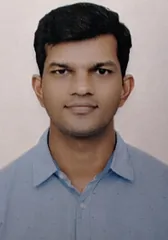
Dr. Shirish Patel is a Consultant Eye Surgeon at Advanced Eyecare Centre, Goregaon West, Mumbai. He trained at Seth G.S. Medical College and KEM Hospital (MBBS) and at PBMA's H.V. Desai Eye Hospital, Pune (DNB Ophthalmology), and holds the FICO (A+B). Over nine years of practice he has performed more than 8,000 cataract surgeries and 400+ refractive procedures. He also consults at Apex Hospitals, Kandivali and Envision Eye Hospital.
This guide is general information written to help you ask better questions. It is not a diagnosis and does not replace an examination. Where price ranges are mentioned, they reflect what is commonly quoted in Mumbai at the time of writing and will vary by hospital, technique and individual case. For sudden vision loss, severe eye pain or injury, contact the clinic or your nearest emergency department immediately.